
Buying property in Normandy in 2025 means navigating between still moderate prices, extended tax incentives, and changing energy constraints that impact the old housing market. The real estate project in Normandy is not just about finding a house with a garden at a sweet price: recent regulations are reshaping purchasing and rental investment strategies throughout the region.
Denormandie Scheme in Normandy: Tax Reduction Extended Until 2026
Are you looking to invest in an old apartment to renovate in the city center? The Denormandie scheme deserves your attention. Extended by the finance law for 2024, it remains accessible until December 31, 2026 for acquisitions with renovation work.
The principle is simple: you buy an old property in an eligible municipality, you carry out works that represent a significant part of the total cost, and you rent the property for several years. In return, you benefit from a tax reduction of up to 21% of the purchase price for a rental commitment of twelve years.
Several Norman cities are concerned, particularly those engaged in city center revitalization programs. Rouen, Le Havre, Caen, and Cherbourg are among the municipalities where this scheme applies. To keep track of available opportunities, real estate on Normandie Libre allows you to spot properties located in these eligible areas.
This scheme specifically targets old city centers undergoing transformation, where the buildings need renovation. It is a concrete tax lever for investors willing to undertake a renovation project.

Energy Performance and DPE: The Filter That Changes the Purchasing Strategy
Why has this topic become central to any purchase of old properties in Normandy? Because energy renovation obligations now apply to landlords, and they also condition access to the Denormandie scheme.
Specifically, the works carried out under the Denormandie scheme must allow for achieving at least an E rating on the energy performance diagnosis after renovation. The expected performance gain is precise:
- In single-family homes, the works must generate an energy performance gain of at least 30%.
- In collective housing, this threshold is set at a minimum of 20%.
- An alternative exists: the creation of new living space can replace the performance criterion, but this is a rarer case.
This regulatory framework has a direct effect on negotiation. A property rated F or G on the DPE is negotiated differently than a property that has already been renovated. The DPE becomes a tool for negotiating the purchase price, not just an administrative document.
For a buyer, this means that the cost of energy renovation works must be integrated into the overall budget from the start of the property search. An apartment listed at an attractive price but rated G may end up costing much more once insulation and heating works are completed.
Prices and the Normandy Real Estate Market: What Averages Don’t Tell
Prices in Normandy remain significantly more accessible than those in Paris and its inner suburbs. This is a known fact. What is less known is the disparity between the micro-markets in Normandy.
Rouen, Caen, Le Havre: Three Distinct Dynamics
In Rouen, the average price of houses is around 2,793 euros per square meter, with a slight decrease over the past year (about 1.8%). This decrease translates into increased purchasing power for buyers. The time to sell is also decreasing, a sign that buyers are returning to the market.
Caen is described as a hyper-dynamic market, driven by student life and connections to Paris. Le Havre, on the other hand, attracts with its maritime positioning and prices even lower than those in Rouen.
The same budget gives access to very different properties depending on the chosen city. Comparing prices per square meter is not enough: one must look at the available supply, rental pressure, and medium-term appreciation potential.
Houses with Gardens: The Criterion That Has Weighed Heavily Since the Health Crisis
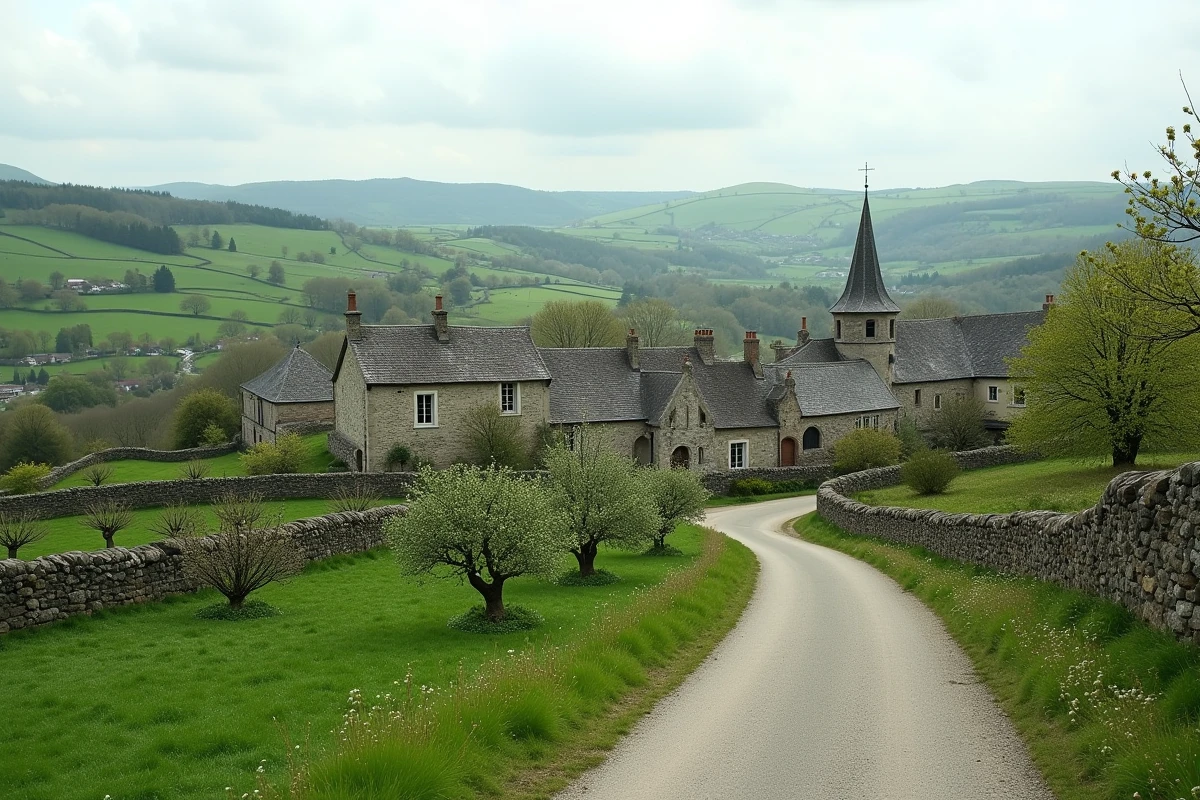
The need for outdoor space remains the top search criterion in Normandy. Houses with gardens are highly sought after, and this trend has not weakened since 2020. Proximity to Paris (about 1h45 for some Norman cities) enhances this appeal for families who partially work from home.
Credit Rates and Financing: Anticipate Rather Than Suffer
The real estate project is not limited to choosing the property. Financing conditions everything else. With loan rates having significantly evolved in recent years, borrowing capacity varies greatly from one semester to another.
Before visiting, it is advisable to obtain an updated loan simulation from your bank or a broker. Two points deserve particular attention:
- The maximum debt-to-income ratio remains capped at 35% of net income, including insurance. This cap is strict, and banks adhere to it.
- The maximum loan duration is set at 25 years (27 years for new builds with a deferral). Beyond that, no institution lends.
- Notary fees in the old market (higher than in new builds) must be included in the financing plan from the outset.
In Normandy, where prices remain contained, a modest personal contribution opens access to properties of comfortable size. This is a concrete advantage compared to the tight markets of Île-de-France.
The Normandy market remains one of the few in France where a first purchase with a reasonable budget provides access to a real quality of life, provided that the project is well calibrated between acquisition price, potential renovation costs, and financing conditions.