
3D printing accessible to individuals is now measured along three axes: the entry cost (purchase of a printer or use of a service), the learning curve in design, and the nature of the objects that can be created. These three parameters have evolved unevenly, and comparing them helps to understand where the real barrier lies for a beginner who wants to bring their ideas to life.
Cost of a personal 3D printer versus on-demand printing services
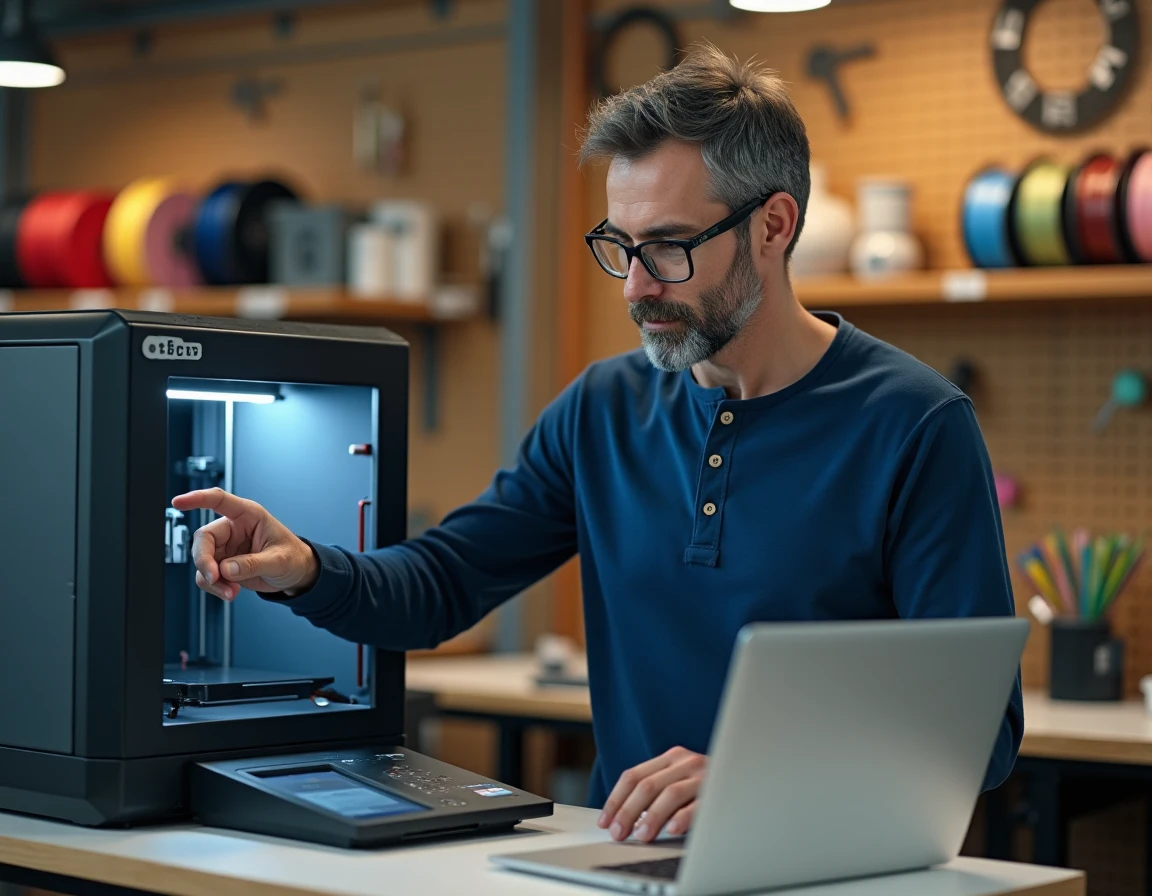
Two paths coexist for accessing 3D printing: owning your own machine or going through a provider. The choice depends on the volume of parts envisioned, the expected finish level, and the initial budget.
Further reading : How to Effectively Manage Your Internet Connections: A Practical Case with Orange
| Criterion | Personal FDM printer (entry-level) | On-demand printing service | Fab lab / library |
|---|---|---|---|
| Initial investment | Several hundred euros | None | Modest or free membership |
| Cost per piece | Low (PLA filament) | Variable, higher per unit | Low (material charged by weight) |
| Available materials | Mainly PLA, ABS, PETG | PLA, SLA resin, nylon, metal depending on the provider | PLA, resin depending on the equipment |
| Learning curve | Calibration, slicing, maintenance | File submission, no adjustments | On-site assistance |
| Production time | Immediate (excluding printing time) | Several days (shipping included) | Depending on machine availability |
For occasional use (a replacement part, a unique prototype), on-demand service remains more rational. However, as soon as the number of projects exceeds a handful per month, purchasing a personal machine becomes cost-effective.
Fab labs and public libraries represent a third path, often underestimated. They allow testing the technology without investing in equipment, with human support that reduces the frustration of initial attempts. The Ottawa Public Library, for example, offers this type of shared access to 3D printers.
Recommended read : How to Optimize Your Freelance Profile with Online Platforms like dgitags.io
Platforms like https://makeitnow.fr/ bring together these different avenues and facilitate the transition from digital file to physical object, whether or not one owns their own machine.
3D design for beginners: free software and ready-to-print files
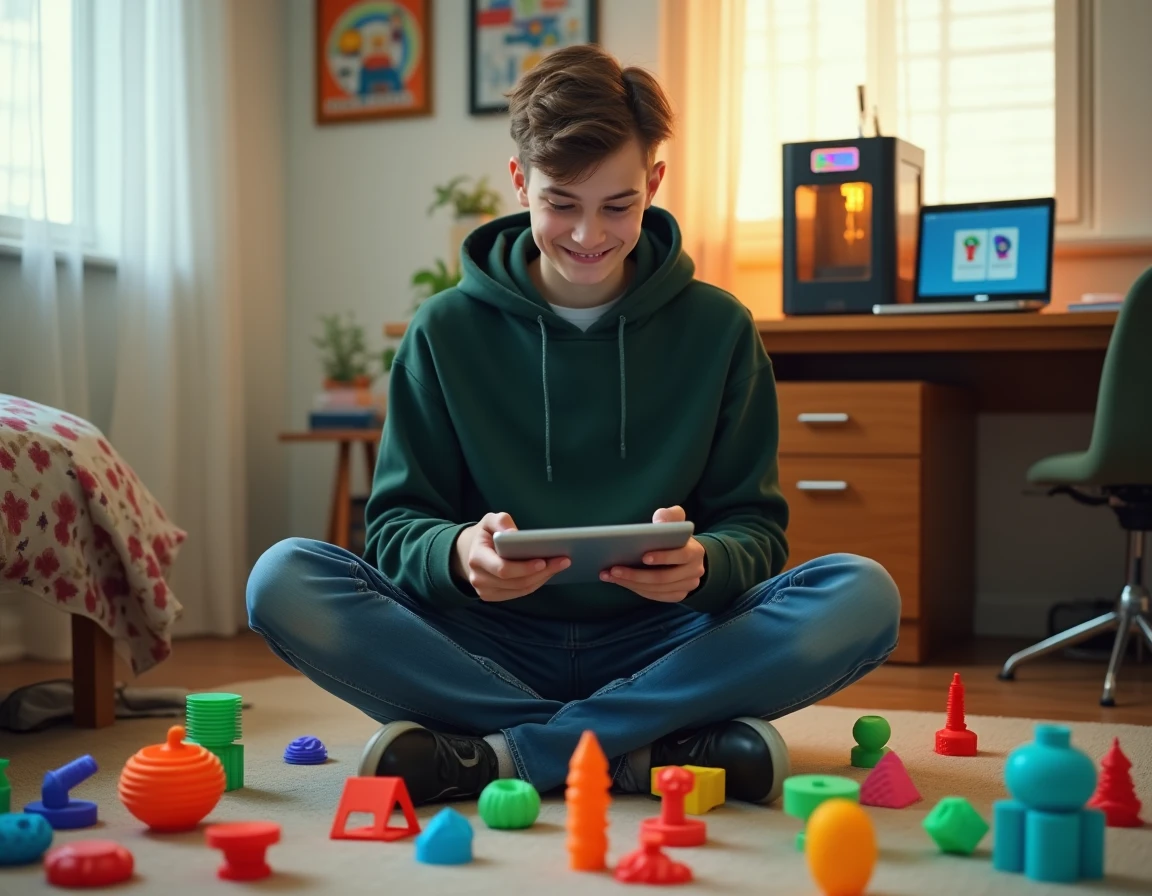
The most underestimated barrier in 3D printing is not the price of the machine. It is the mastery of digital design that hinders most beginners.
Two strategies circumvent this obstacle:
- Downloading ready-to-print models from online libraries (Thingiverse, Printables, MakerWorld). Thousands of STL files cover everyday objects, from replacement hinges to phone stands.
- Using free parametric modeling software like TinkerCAD (block interface, no prior skills required) or Fusion 360 in its personal version for more technical parts.
- Engaging a custom modeling service when the geometry of the part exceeds one’s skills, which some specialized providers offer.
The choice between these approaches depends on the nature of the project. Reproducing a broken part requires taking precise measurements and mastering CAD software. Printing a decorative accessory can be done in a few clicks from an existing file.
Downloadable files or personal modeling
Ready-to-use models are suitable for most initial projects. The shift to personal modeling becomes necessary as soon as one seeks a part with exact dimensions, for example, a mounting clip suitable for a specific piece of furniture or an adapter for an old device for which the manufacturer no longer sells accessories.
This transition to custom design represents the real leap in skill. It transforms the user from a simple consumer of files into an independent creator.
Materials and 3D printing technologies: FDM, SLA, and their practical uses
The choice of material and technology directly determines what can be manufactured. The two most common processes among individuals are fused deposition modeling (FDM) and stereolithography (SLA).
FDM uses a thermoplastic filament (PLA, ABS, PETG) deposited layer by layer. PLA, biodegradable and easy to print, dominates domestic uses. ABS offers better thermal resistance but emits fumes that require proper ventilation.
SLA works through the photopolymerization of a liquid resin under the effect of a UV laser. It produces parts of superior finesse, with sharper details. SLA resin is suitable for objects that require a smooth surface, such as jewelry, detailed figurines, or dental prototypes.
| Parameter | FDM (filament) | SLA (resin) |
|---|---|---|
| Typical layer resolution | 0.1 to 0.3 mm | 0.025 to 0.1 mm |
| Post-processing | Support removal, optional sanding | Washing with isopropyl alcohol, UV curing |
| Common materials | PLA, ABS, PETG, TPU | Standard resin, flexible resin, dental resin |
| Main personal use | Functional parts, repairs, rapid prototyping | Decorative objects, miniatures, jewelry |
Post-printing treatment is often an overlooked time commitment. A SLA part requires chemical cleaning followed by UV curing. An FDM part may require sanding or acetone treatment to smooth visible striations.
3D printing and object repair: the game-changing use
Recent content on 3D printing shows a clear shift in uses. Repairing and extending the lifespan of everyday objects are gradually supplanting the creation of gadgets.
Recreating a dishwasher hinge, an oven button, a furniture leg, or a car mounting clip: these functional projects represent an increasing share of files shared on community platforms. The benefits are twofold. One avoids the complete replacement of a device for a part costing just a few cents in filament, and reduces waste.
This type of use, however, requires precise design. The part must meet the dimensions and mechanical tolerances of the original. A digital caliper and minimal skills in parametric modeling then become as useful as the printer itself.
Accessible 3D printing is no longer limited to purchasing a cheap machine. The real lever for democratization lies in access to files, design skills, and shared services. The key takeaway: the majority of beginners who give up do so not because of the cost of equipment, but because they have not crossed the threshold of personal modeling.