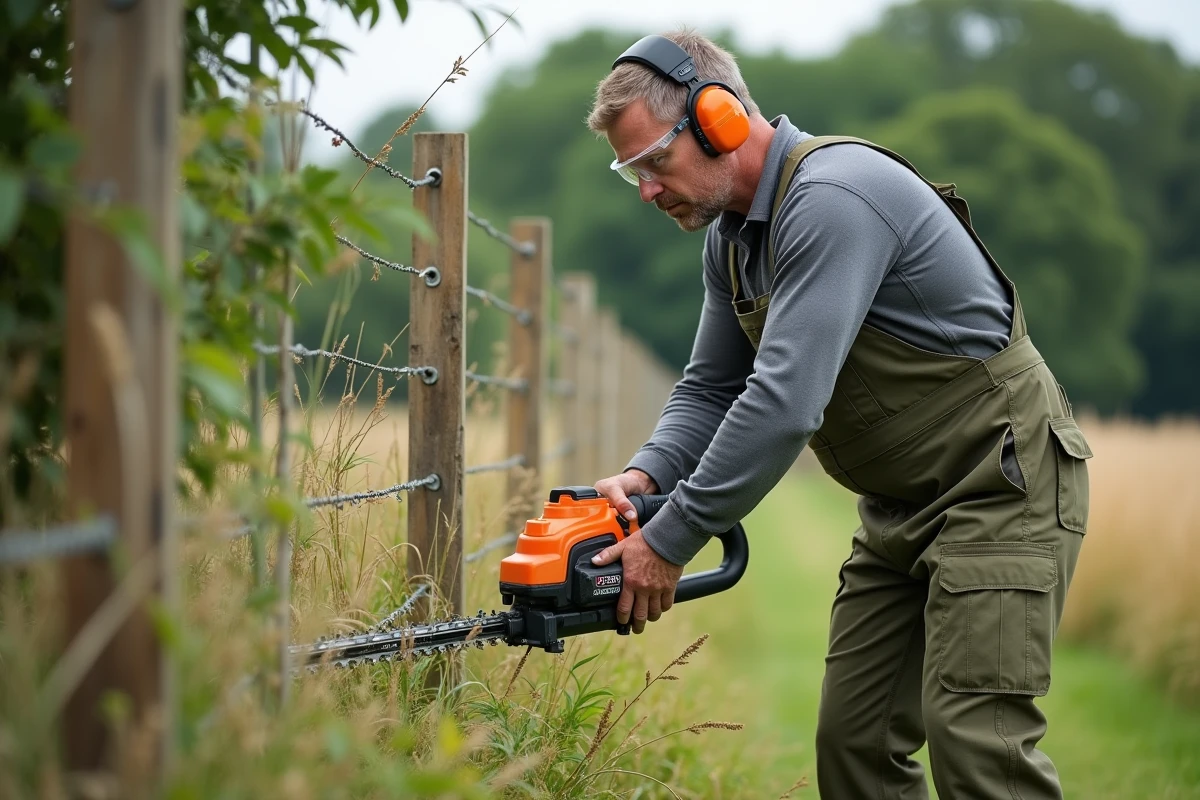
When tackling an overgrown slope filled with brambles after three weeks without maintenance, the difference between a well-chosen gas-powered brush cutter and an undersized model can be measured in minutes of work and lower back pain the next day. The gas engine remains the benchmark for demanding terrains, sloped plots, or dense vegetation where battery life still shows its limits.
However, it is essential to know what type of engine, cutting system, and harness are suitable for your garden.
2-stroke or 4-stroke engine: how the choice affects performance
On an uncultivated plot with tall grasses and some woody regrowth, you can immediately feel the difference between a 2-stroke engine and a 4-stroke. The 2-stroke delivers a responsive torque, revs up quickly, and is lighter to carry over the shoulder for an hour. The downside: you need to prepare a gas-oil mixture with every fill-up, and the noise level can lead to quicker fatigue.
The 4-stroke engine (such as the Honda UMS 425, mentioned in several recent comparisons) consumes less fuel, vibrates significantly less, and does not require a mixture. In return, the extra weight of a 4-stroke is noticeably felt during long sessions, especially on sloped terrain. Feedback varies on this point: some users find the extra weight acceptable thanks to a good harness, while others prefer the responsiveness of the 2-stroke for short, intense sessions.
You can compare models and consult detailed specifications on top-debroussailleuse-thermique.com before deciding between these two engine families.
Nylon line or blade: adapting the cutting system to the vegetation
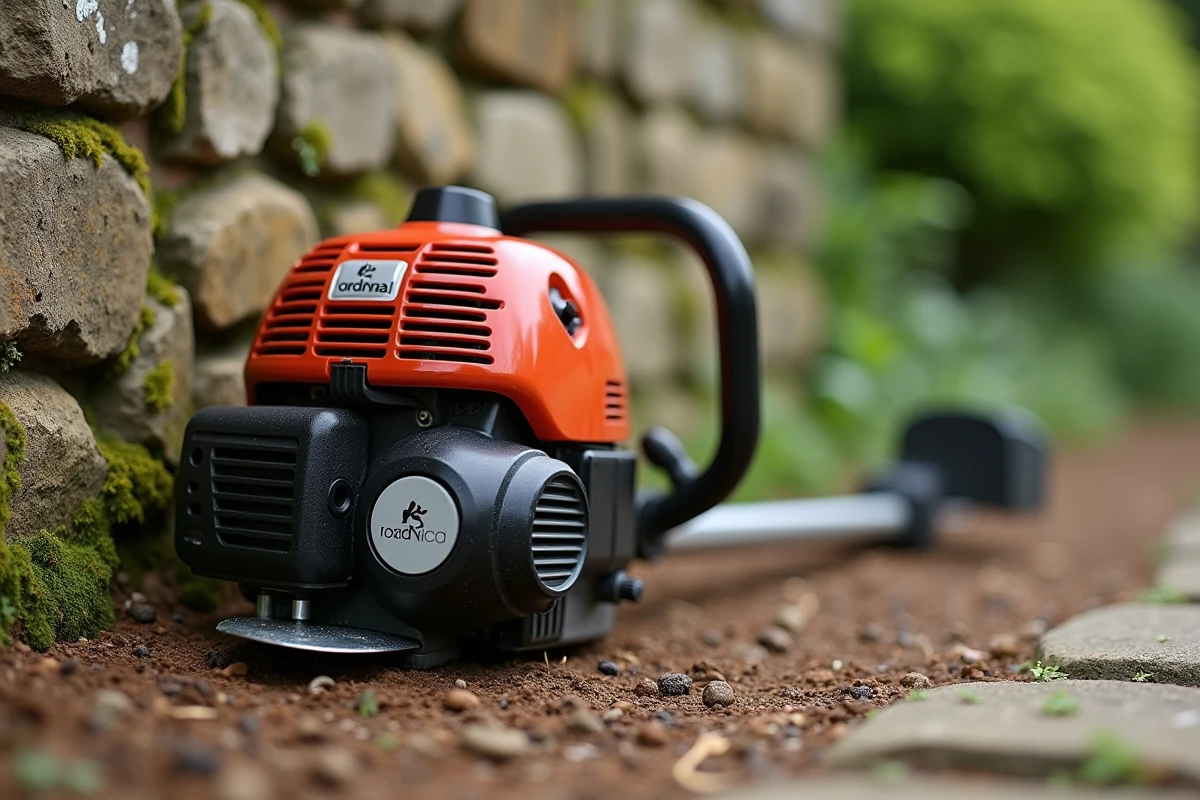
Many gas-powered brush cutters accept multiple interchangeable cutting heads. The choice between nylon line and blade is not random: it directly depends on what is growing on your plot.
- The nylon line is suitable for soft grasses, borders, and finishing touches along walls. It wears out quickly on thick stems and breaks cleanly on established brambles.
- The 3-tooth blade cuts through dense underbrush, young shrub shoots, and seed-bearing nettles. It requires a bit more caution near fences or stones.
- The brush blade (type 80 teeth or circular saw) is intended for heavy forestry work, with a larger stem diameter. Rarely useful for a residential garden, but essential on a semi-wooded plot.
In practice, having both a nylon line and a 3-tooth blade covers the majority of situations in a medium-sized garden. Switching from line to blade takes just a few minutes, without tools on most recent models.
Harness and ergonomics: the criterion that product sheets underestimate
A powerful engine with a poor harness turns a morning of brush clearing into a nightmare. The engine’s power grabs attention, but it is the carrying system that determines how long you can hold out before putting the machine down.
Simple shoulder harnesses are sufficient for sessions of twenty to thirty minutes on flat terrain. Beyond that, or as soon as the terrain has elevation changes, a double harness with back support reduces the load on the shoulders and lower back. Stihl and Husqvarna models include padded harnesses with back plates in their semi-professional and professional ranges.
The type of handle also plays a role. The bicycle-type handlebar provides better lateral control for mowing large flat areas. The loop handle, more compact, facilitates work on uneven terrain or between trees. On models like the Stihl FS 131, the anti-vibration system reduces hand fatigue during long sessions.
Actual operating cost of a gas-powered brush cutter over several seasons
The purchase price represents only part of the actual budget. Tests conducted by UFC-Que Choisir show that for an individual using their brush cutter a few hours per month, the costs for gas, oil, and maintenance exceed the initial purchase price over five years, especially for entry-level models.
Recurring maintenance costs to consider:
- Spark plug (annual or biannual replacement depending on use)
- Air filter (regular cleaning, replacement when deformed or punctured)
- Cutting head and nylon line (main consumable, especially on stony terrain)
- 2-stroke mixture or engine oil change for 4-strokes
An entry-level, low-cost model with a modest engine displacement may consume more line and gas than a better-designed semi-professional model because it struggles more with thick vegetation. The long-term calculation often favors an initial investment one step higher.
Regulation and noise: what changes for gas-powered brush cutters
The European Stage V regulation now governs pollutant emissions from small non-road engines, directly affecting the 2-stroke and 4-stroke engines of brush cutters. In practice, manufacturers are adapting their ranges with cleaner combustion systems, and some older models are disappearing from catalogs.
At the same time, several French metropolitan areas that have established Low Emission Zones are beginning to integrate green space maintenance equipment into their nuisance reduction plans. The Unep observes a growing demand for zero-emission equipment in public markets since 2023, which influences the available offer for individuals.
Checking municipal regulations on brush clearing hours remains a reflex to adopt. Some municipalities limit the use of gas-powered equipment to weekdays and specific time slots, with fines for violations.
The gas-powered option retains a clear advantage in power and autonomy for challenging terrains. For a modest-sized residential garden, the question of high-voltage batteries deserves consideration, especially since recent 36V or 54V ranges are catching up in cutting performance. The right choice ultimately depends on the terrain, frequency of use, and duration of sessions.