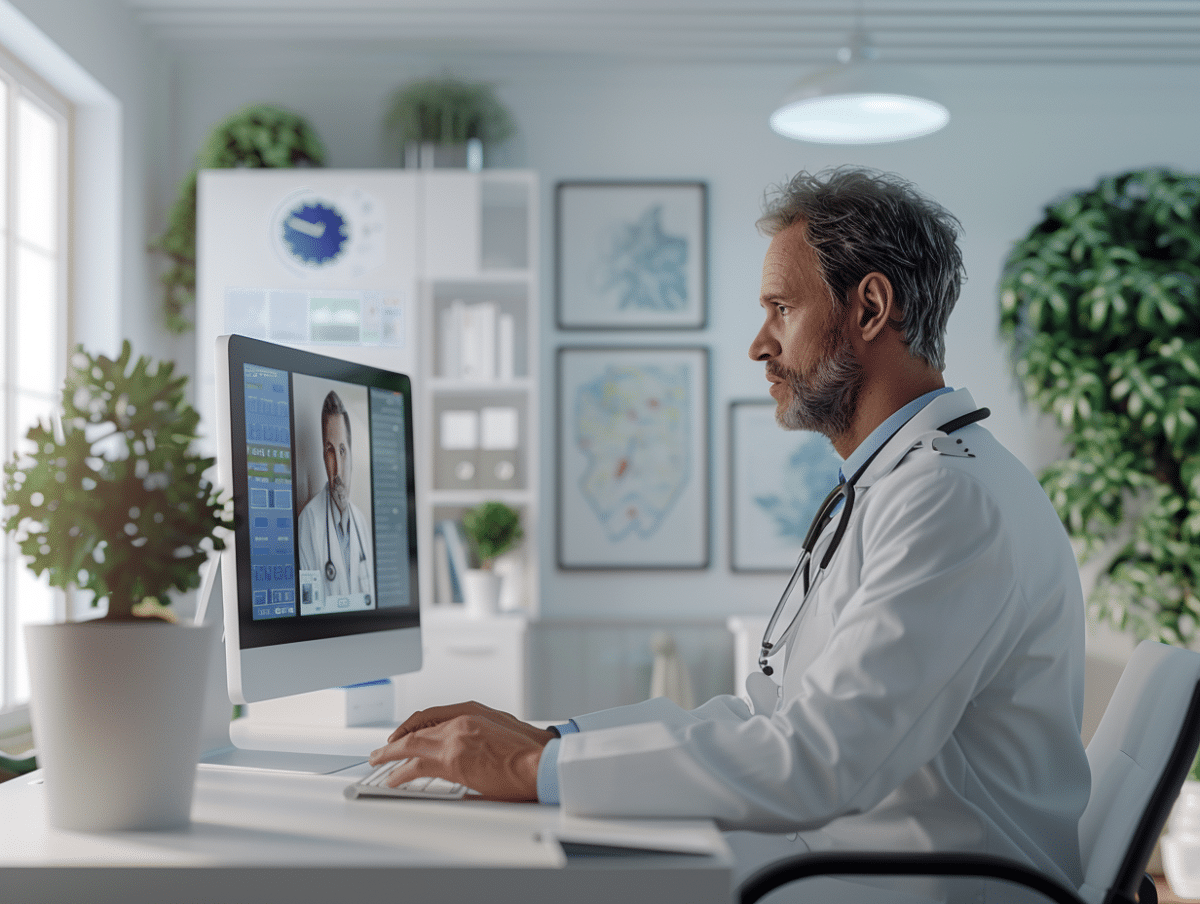
The residents of Bordeaux, like those in many other cities, are discovering the benefits offered by telemedicine. By avoiding often cumbersome travel and long waits in waiting rooms, this method allows patients to consult a doctor from the comfort of their home.
Healthcare professionals in Bordeaux are also adopting this approach, thus facilitating access to care for people with reduced mobility or living in isolated rural areas. Teleconsultation is establishing itself as a practical and effective solution, improving patients’ quality of life while optimizing practitioners’ time.
The benefits of teleconsultation for Bordeaux patients
Bordeaux patients, particularly those with chronic illnesses, greatly benefit from teleconsultation. Monitored at home, they reduce their exposure to viruses and decrease their reliance on emergency services. This approach, favored by satisfaction surveys conducted among patients and healthcare professionals, has demonstrated the relevance of telemonitoring during the pandemic. The system, which began in January 2022, quickly established itself as a major asset.
A shared telemonitoring system
At the Bordeaux University Hospital, a shared paramedical team is in direct contact with specialized pulmonology medical teams. Patients equipped with a ventilation device benefit from continuous monitoring, with information being transmitted to doctors such as Dr. Grassion, Dr. Zysman, and Dr. Macey. This organization allows for optimal and responsive care.
A concrete example: general practitioner Bordeaux Medadom
Platforms like general practitioner Bordeaux Medadom illustrate the advancements in teleconsultation. They allow patients to quickly consult a practitioner, obtaining medical advice without leaving their home. This solution is particularly useful for those living in rural areas or medical deserts, offering an effective alternative in the face of a shortage of healthcare professionals.
- Reduction of travel and exposure to viruses
- Continuous monitoring for chronic illnesses
- Optimization of medical resources
The advantages of teleconsultation are numerous, both for patients and healthcare professionals, allowing for better management of daily care. In times of health crises, it represents a preferred solution for maintaining a respected and secure care pathway.

The challenges and prospects of teleconsultation in France
Teleconsultation, despite its many advantages, must overcome several challenges to establish itself sustainably in the French medical landscape. One of the primary issues lies in managing alerts in the event of abnormal values detected by telemonitoring devices. Currently, specialties like neurology are using this technology to monitor patients who have experienced a stroke. Since March 2022, a team led by Prof. Sibon and Dr. Renou has been experimenting with this approach.
Connected devices for enhanced monitoring
Technological advancements allow for the integration of tools such as smartwatches that record ECG traces, measure blood pressure and saturation, and detect falls. This data is crucial for cardiologists like Prof. Pierre Bordachar, head of the cardiac pacing and defibrillation unit. These devices still need to prove their reliability and ability to alert doctors in real-time.
- Continuous monitoring of at-risk patients
- Responsiveness to detected anomalies
- Integration of new technologies in medical follow-up
Prospects for extension to other specialties
Telemonitoring is not yet widespread in fields like diabetology. Professors Mohammedi, Rigalleau, and Blanco are working on integrating these technologies to monitor diabetic patients. Their goal is to improve remote care and prevent complications. These initiatives demonstrate the potential of teleconsultation to transform medical follow-up, but they require increased coordination among healthcare professionals and adaptation of infrastructures.
The challenges to overcome include training for doctors, adapting healthcare systems, and ensuring effective coverage by health insurance and supplementary health insurance.