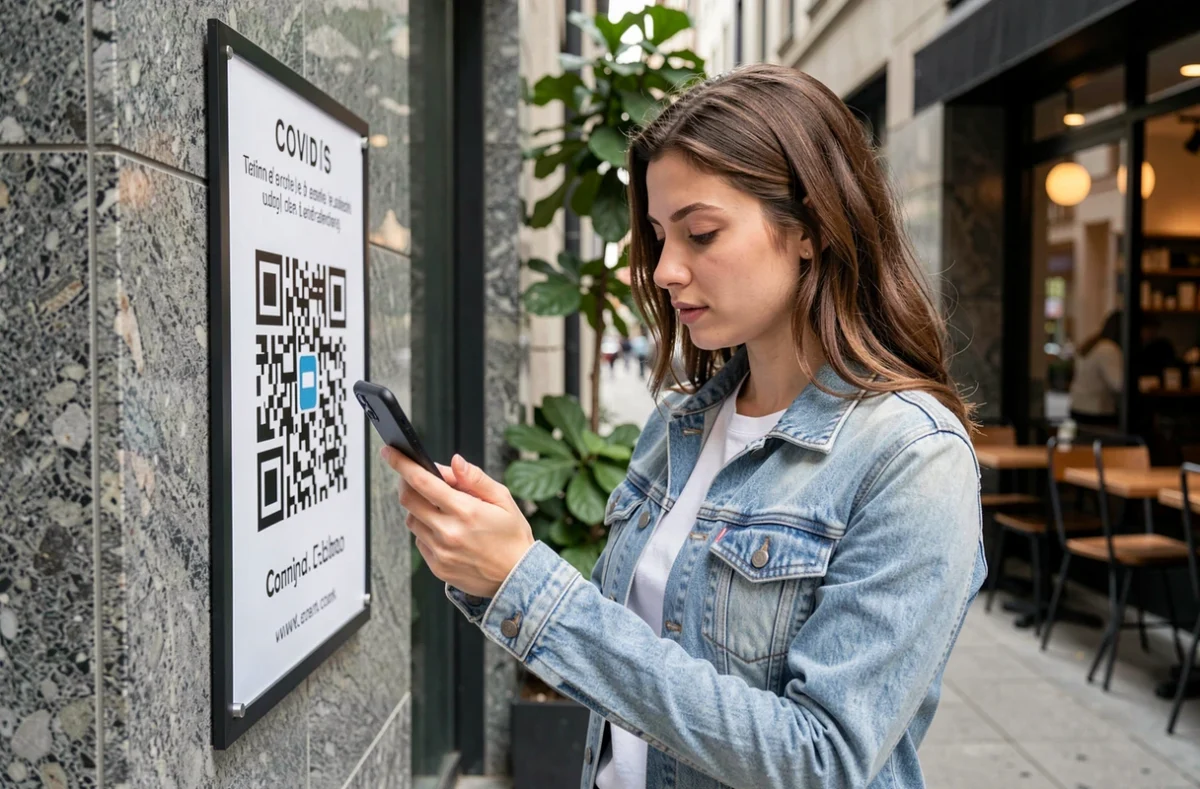
In the era of the pandemic, QR Codes have become a daily tool for verifying health passes and accessing essential information about COVID-19. In light of the massive adoption of this technology, you need to understand how to read them accurately and quickly. Many people sometimes find themselves confused by these square barcodes, wondering how to optimize their use. Having a few tips up your sleeve can therefore be a real asset for navigating smoothly through this digital jungle. Mastering the reading of anti-COVID QR Codes has become as fundamental as using hand sanitizer.
The key steps to reading an anti-COVID QR code
Reading an anti-COVID QR code starts with acquiring a smartphone, an essential tool for deciphering these mysterious squares. This device is complemented by the TousAntiCovid app, the successor to StopCovid, which employs contact tracing to limit the spread of the virus. Install this app, as it is specifically designed to scan the health pass, which contains a QR code encapsulating data such as the result of a PCR test or proof of vaccination.
Once the TousAntiCovid app is activated, point your smartphone’s camera at the QR code, which may be found on your EU digital covid certificate, a type of European health pass. Ensure that the code is well-framed and that the ambient light allows for interference-free reading. The app will then analyze the black and white pixels to extract the encoded information.
Respond to the app’s prompts if it requires your consent to access certain features of your phone. For example, access to the camera is necessary to read the QR code. Be vigilant: do not grant unnecessary permissions that exceed the strict framework of reading the code.
View the information decoded by the app. You will see details related to your health status, such as ‘HC1 6BFOXN’, confirming your vaccination or the negativity of your test. Transparency is key: the displayed data must match what you have provided. No anomalies should be tolerated, as they could indicate a malfunction or a security issue.
Protecting your privacy and securing QR code reading
The handling of personal data is of growing interest in our digital society, especially when it comes to scanning anti-COVID QR codes. While useful, these codes can also be a vector for sensitive data. Cybersecurity is becoming a major issue for preserving the integrity of this information. Be cautious of third-party apps that offer to scan QR codes; prefer official ones, like TousAntiCovid, which guarantee the protection of your health data.
Listen to experts like Nicolas Viot from the company Intrinsec, who advises heightened vigilance against the risks of cyberattacks, particularly phishing. A malicious QR code can redirect the user to fraudulent sites. Therefore, always check the source of QR codes before scanning them. Use a dedicated device for this task, such as a smartphone, and avoid PCs that, while capable of decrypting complex QR codes, are more vulnerable to large-scale cyberattacks.
Regarding the scanner itself, adjust your camera settings to avoid the unintended recording or sharing of images. Indeed, the automatic saving of photos containing QR codes could pose a vulnerability in protecting your personal data. Some smartphones offer options to scan codes without saving an image, a feature to enable for enhanced security.
The vaccination certificate is an official document, often required in digital form as a QR code. To consult it securely, ensure that the app used is regularly updated, incorporating the latest security measures set by the relevant authorities. Be aware that every interaction with a QR code can be an entry point for malicious intrusions and act accordingly to protect your privacy.