
The digital age has seen the emergence of cutting-edge technologies that promise to enrich our daily lives. Among the potential benefits, the improvement of sleep quality stands out as a favored area of research and innovation. Sleep disorders, common in our modern, stressful societies, can negatively impact health and well-being. Fortunately, advancements such as sleep tracking apps, smart mattresses, light therapy, and AI-assisted meditation devices offer promising solutions to help us sleep better and recover more effectively.
Innovative Technologies for Optimized Sleep
Smart beds, equipped with sophisticated sensors, are making their way into our bedrooms to revolutionize our nights. Smart mattresses, like the ReST Bed, perfectly illustrate this advancement. These adaptive sleeping surfaces continuously track body movements, adjust firmness according to individual needs, and analyze sleep data to provide customized comfort. Those struggling to find rest benefit from a valuable ally to optimize their sleep hours.
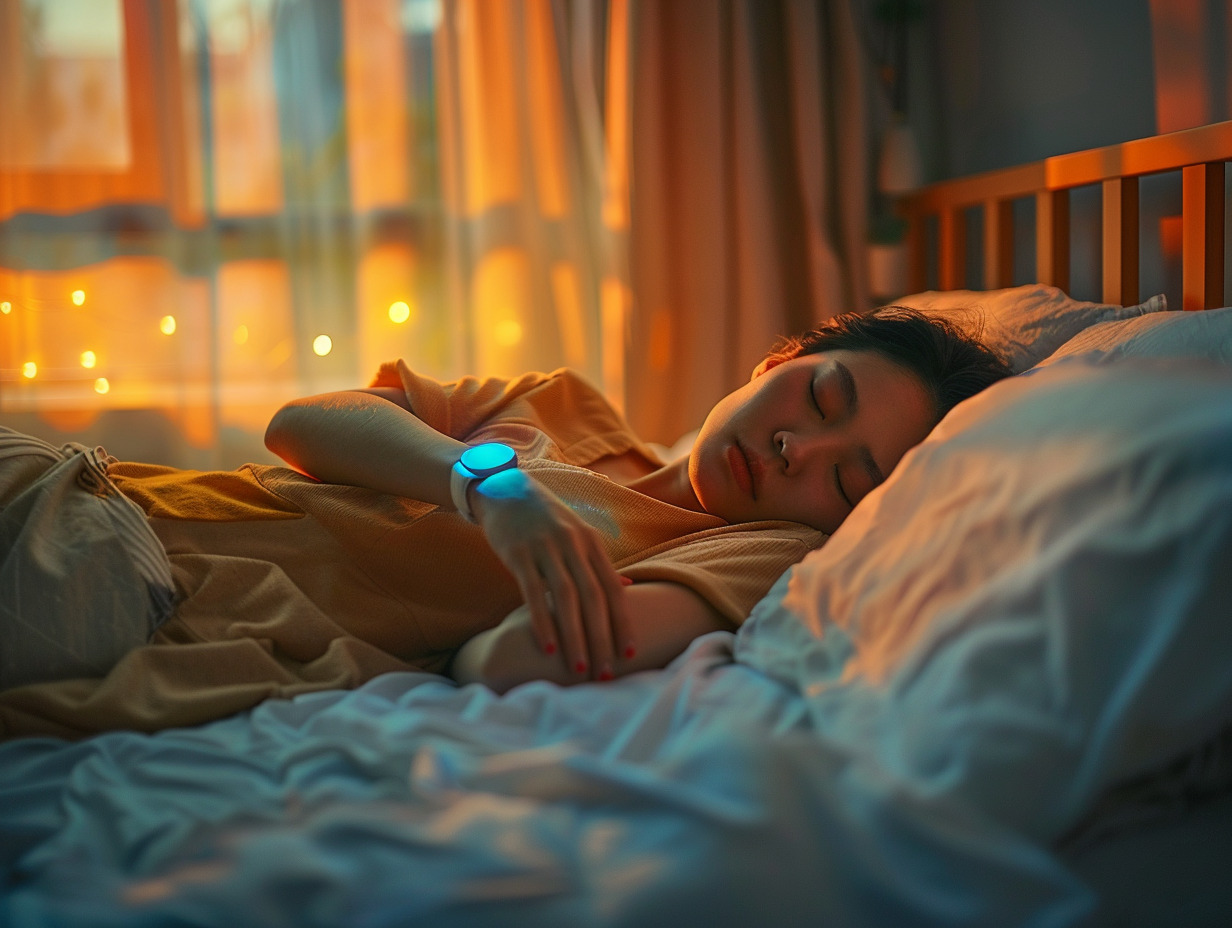
Sleep apps also play a central role in improving nighttime habits. They offer detailed analyses of sleep cycles, provide personalized advice, and offer soothing sounds to facilitate falling asleep. The interaction between these software applications and connected devices, such as the smart baby monitor Nanit, which monitors infants’ sleep, or the UrgoFeel, which supports heart coherence practices, creates a beneficial ecosystem for restorative sleep.
Finally, home automation serves as a catalyst for an environment conducive to rest. By controlling lighting, temperature, and ambient noise, this technology transforms the bedroom into an oasis of tranquility. Smart home devices, by harmonizing with the specific needs of the individual, promise to make sleep not a luxury but an accessible component of a balanced and healthy life. Consider these advancements as tools, not ends in themselves, to navigate towards more serene nights.
Practical Tips for Integrating Technology into a Healthy Sleep Routine
Managing blue light exposure is a crucial step in establishing a beneficial bedtime routine. Screens, omnipresent in our daily lives, emit this light that affects melatonin secretion, the hormone that regulates sleep. To counteract this effect, prioritize blue light-blocking glasses or activate filters on your electronic devices two hours before bedtime.
The National Sleep and Vigilance Institute, as an organization dedicated to improving sleep quality, provides valuable information on the interaction between sleep and new technologies. Consult their resources to understand the mechanisms of sleep and effectively integrate technological tools into your routine.
Online services, such as ThéraSomnia, offer personalized programs to combat sleep disorders like insomnia. These platforms use cognitive-behavioral sessions to retrain bad habits and promote healthy practices. Sign up for these programs to benefit from structured and scientifically-based support.
For those looking to improve their stress management and consequently their sleep, the UrgoFeel product helps practice heart coherence. Paired with a smartphone app, this connected tool guides the user through breathing exercises, thereby promoting relaxation before bedtime. Adopt this device to establish a soothing transition to sleep.