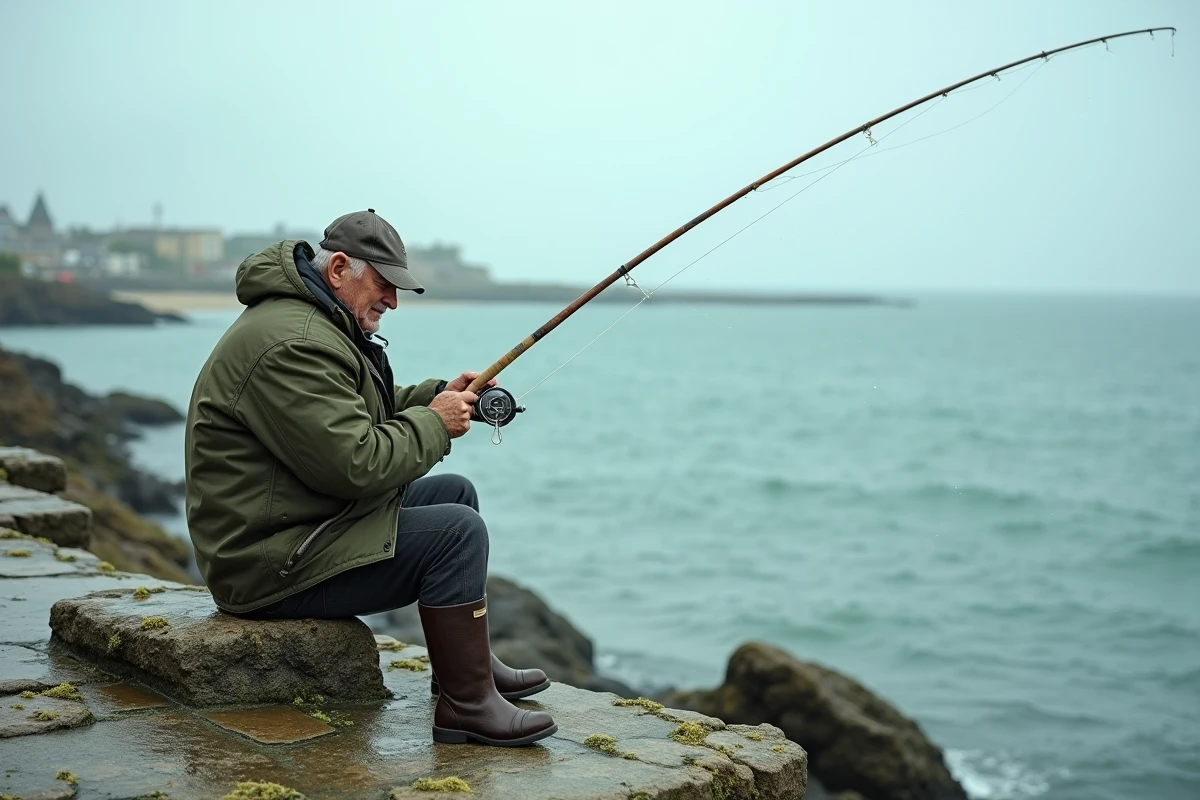
In Guilvinec, the port attracts the eye, but the best fishing spots from the shore are often found where walkers do not go. The breakwaters, rock formations, and channel exits offer varied conditions depending on the tide, wind, and season. One must know where to position themselves, and especially why a particular spot works better than another at a given moment.
Channel exit and north breakwater: spots that have changed since dredging
You may be used to fishing from the docks of the inner harbor. Since the occasional dredging and the increase in ship traffic in the basin, the bass are now holding more towards the outer harbor. Local guides and retailers in Pays Bigouden have confirmed this since 2023: the channel exit and the north breakwater concentrate the most consistent bites.
This shift can be explained simply. The turbulence created by boats and dredging work disrupts the spots in the basin. Fish, especially bass, prefer areas where the current flows freely with good oxygenation. The north breakwater, facing the open sea, offers exactly that.
For those looking to delve deeper into shore fishing in Guilvinec, this recent rotation of productive areas is a factor to consider even before choosing your gear.
Reading the terrain: current, tide, and bottom structure in Guilvinec
Dropping your line randomly on a breakwater is like tossing a coin in the air. To increase your chances, you need to understand what is happening beneath the surface.
The tidal current, the first indicator
In Guilvinec, the tidal current runs along the rock formations and accelerates at the channel exit. It is in these currents that bass hunt, as small fish and crustaceans are swept away. Position yourself where the current accelerates, not where the water stagnates.
In practice, look for surface turbulence. A slight bubbling along a rock formation indicates a change in the bottom or depth. These are prime spots.
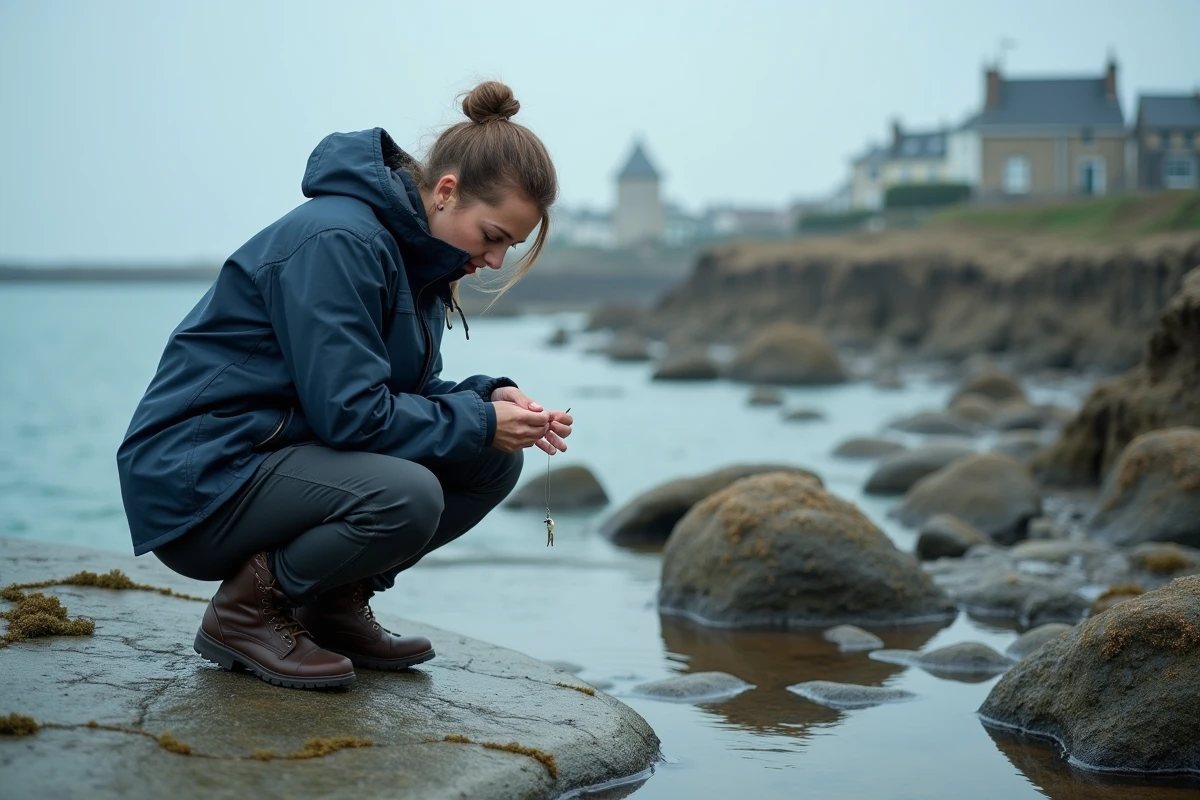
The intertidal zone and rocky areas at low tide
At low tide, the intertidal zone reveals rocky plateaus covered with seaweed and shellfish. These areas attract smaller bass and other coastal species. The rising tide is the key moment: fish follow the water that rises over the rocks to feed.
Fishing on the rising tide, facing a rocky plateau, yields better results than waiting for high tide on an exposed breakwater. The fish are moving, active, and the noise of your lure or bait blends with the natural sound of water on the rocks.
Prefectural orders and temporary closures: what changes your spots
You arrive in Guilvinec, your gear is ready, but an area is closed by prefectural order. This is common. The area is regularly subject to partial closures due to microbiological contamination or the presence of toxins in shellfish.
These restrictions do not only affect shore fishing. They also change the habits of shore anglers, who retreat to nearby breakwaters, rock formations, and estuaries. As a result, some usually quiet spots become very crowded, and fishing pressure redistributes the fish.
Before you go, check the current orders with the Finistère prefecture or at the town hall. A closed spot today may reopen in a few days, and vice versa.
- Check the prefectural orders online or at the town hall before each outing to avoid a fine and a spoiled trip.
- Identify two or three alternative spots (north breakwater, rock formations on the open sea side, nearby estuary) to adapt in case of closure.
- Temporary closures create resting zones for fish: upon reopening, these areas are often more productive for a few days.
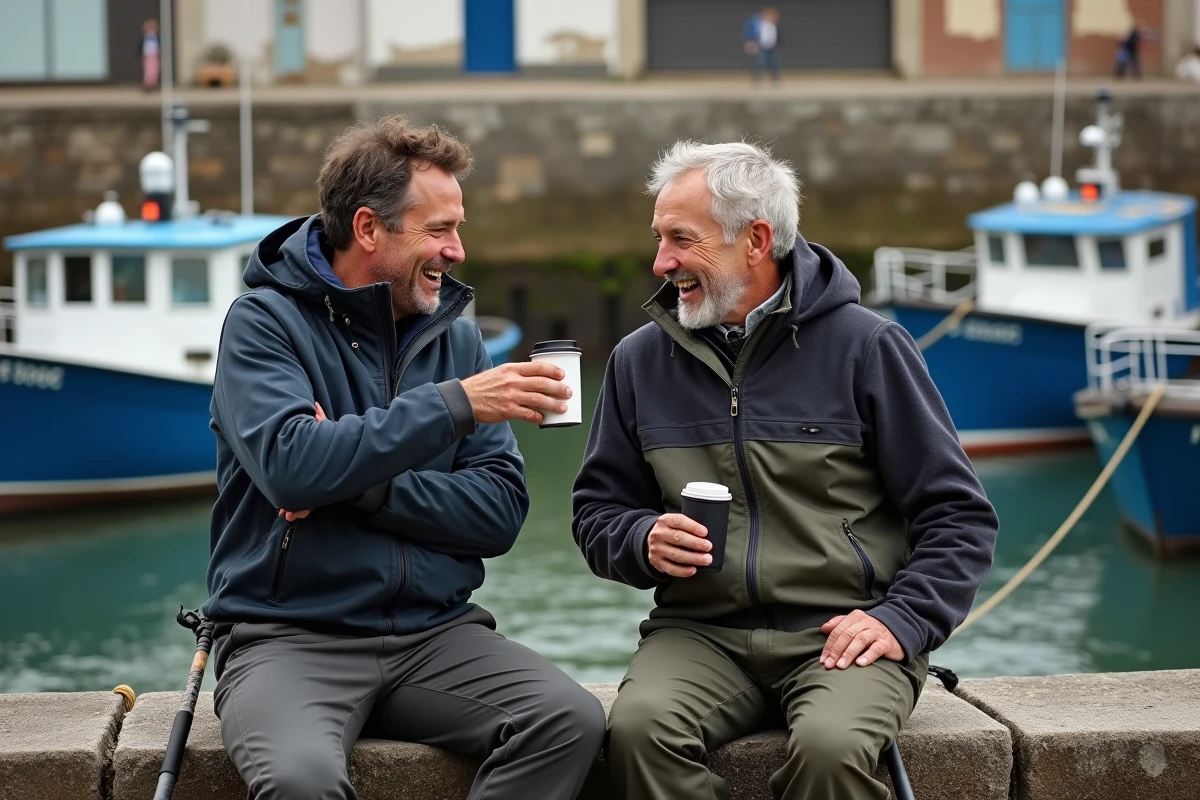
Techniques and gear suited to Guilvinec spots
The spots in Guilvinec share a common point: they mix rocks, seaweed, and current. This strongly influences the choice of gear and technique.
Soft lures and swimming baits
On the rock formations and at the channel exit, a medium-sized soft lure, retrieved slowly near the bottom, mimics the natural prey stirred up by the current. Swimming baits like minnows, cast across the current and retrieved with a wobble, work well when bass are hunting on the surface.
Favor lures with natural colors (dark back, light belly) in the clear waters of Guilvinec. Flashy colors are mainly useful in murky water after a storm.
Rigging and leader line
The rocks snag. A fluorocarbon leader offers better abrasion resistance than standard nylon. If you are fishing with natural baits (crabs, worms), a sliding weight rig allows you to feel the bites without the fish detecting too much resistance.
- Fluorocarbon for the leader line to withstand the friction of rocks and seaweed.
- Weight heavy enough to hold in the current, but not excessive: the rig should roll slightly on the bottom to appear natural.
- Hook suited to the bait: single for worms, circle hook for crabs, treble for hard lures.
Guilvinec does not require high-end gear. A versatile rod, a reliable reel, and a thoughtful selection of lures or baits are enough to cover most situations encountered on the breakwaters and rock formations.
What makes the difference here is reading the terrain and timing. Arriving an hour before the rise at a well-chosen spot, with a rig suited to the rocks, produces more results than the best equipment placed in the wrong spot.