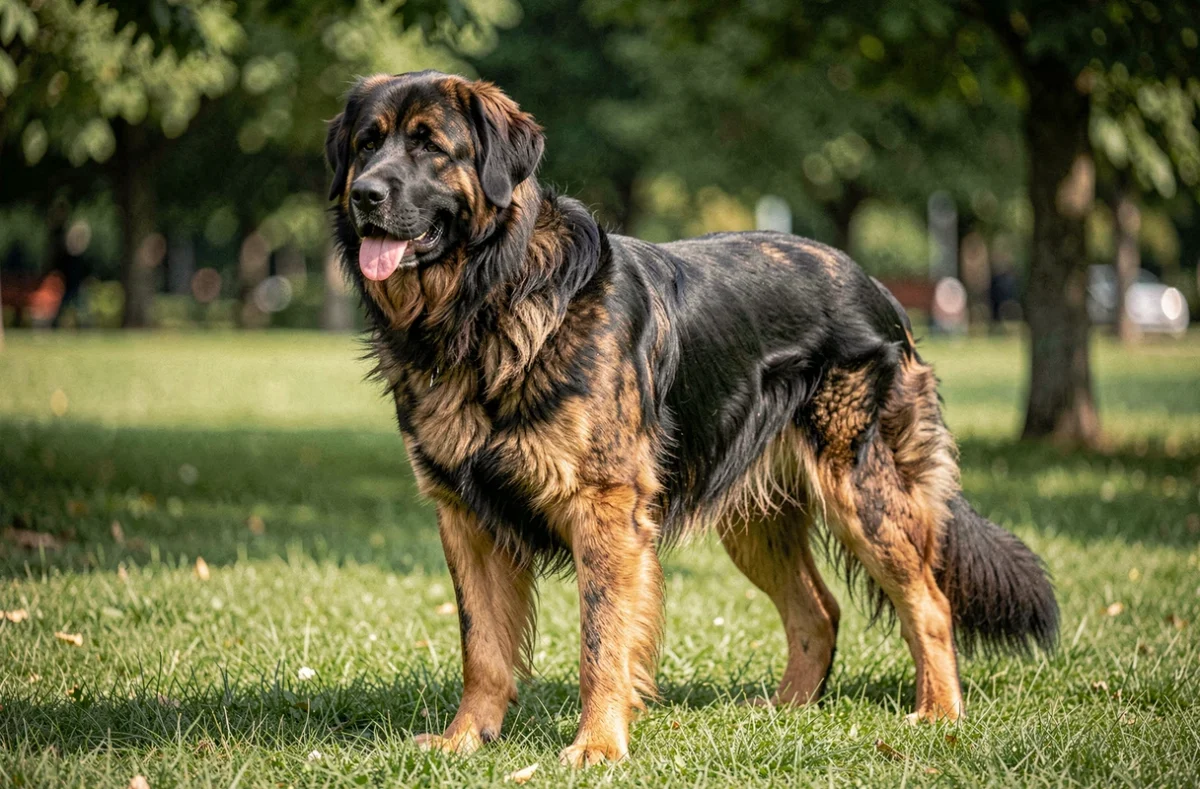
Crossing a German Shepherd with a Newfoundland brings together two genetic backgrounds whose effects on size, coat and bone structure cannot be reduced to a simple arithmetic average. The resulting dog’s appearance varies from one individual to another, even within the same litter, making any standardized description unreliable. To understand these differences, it helps to look at the physical characteristics of both parent breeds and see what their combination can produce in practice.
German Shepherd and Newfoundland size: figures for the parent breeds
| Characteristic | German Shepherd (male) | German Shepherd (female) | Newfoundland |
|---|---|---|---|
| Weight | 30 to 40 kg | 22 to 32 kg | Heavier (giant breed) |
| Height at the withers | 60 to 65 cm | 55 to 60 cm | Taller than the German Shepherd |
| Coat type | Short, medium or long | Short, medium or long | Long, dense and water-resistant |
| Life expectancy | 11 to 13 years | 11 to 13 years | Generally shorter than that of medium-sized breeds |
The Newfoundland is classified as a giant breed. The German Shepherd is a large breed, but does not reach that category. The difference in weight between the two parents explains why puppies from the same cross can have very different builds.
A naturally bred German Shepherd–Newfoundland cross inherits a unique combination of genes, making its adult weight particularly difficult to predict.
German Shepherd–Newfoundland cross coat: why every puppy is different
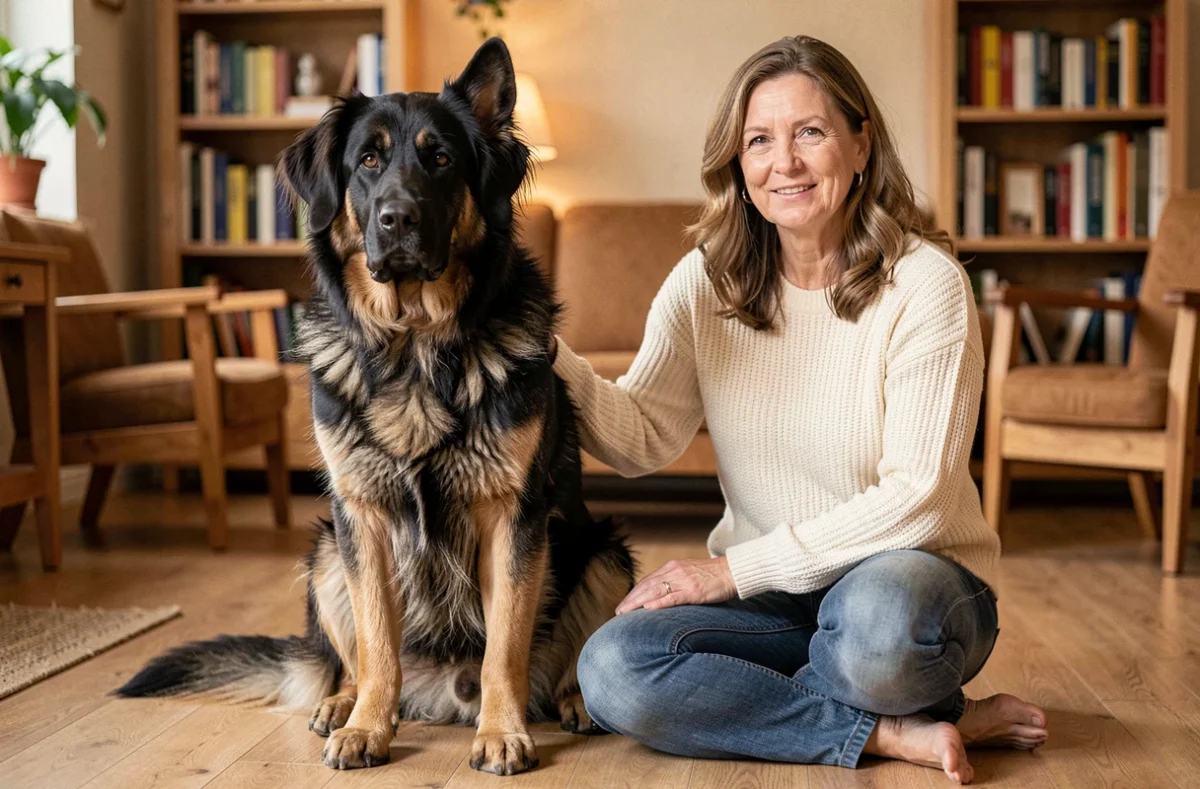
Coat length, texture and markings depend on several distinct genes. German Shepherds can have short, medium or long coats. Newfoundlands always have a long, dense coat with a waterproof undercoat inherited from their water-working origins.
When these two coat types are combined, traits visible in one parent may be masked by variants inherited from the other. One puppy may have a relatively flat, medium-length coat, while its littermate has thick, slightly wavy fur that more closely resembles the Newfoundland’s.
Colors and markings
The German Shepherd often passes on black and tan, bicolor or solid black coats. The Newfoundland contributes solid black, brown or black and white (Landseer type) coloring. The cross may therefore have a solid dark coat, muted tan markings or white patches on the chest.
It is better to describe the possibilities than to promise a specific coat color. No breeder can guarantee the final color of a puppy from this cross before its adult coat comes in.
Joint health in crossbred dogs: hip and elbow dysplasia
Hip dysplasia is one of the conditions commonly found in large breeds. It affects both German Shepherds and Newfoundlands. Elbow dysplasia has also been reported in both parent breeds, so this cross warrants extra attention.
This does not mean that every dog from this cross will develop these conditions. Genetic predisposition is not a certainty, but it does make the following steps important:
- Ask for the hip and elbow screening results for both parents before acquiring a puppy
- Monitor the puppy’s growth with a veterinarian experienced with large breeds, adjusting exercise during the first few months
- Choose a diet formulated for the growth of large-breed dogs to limit excessive strain on developing joints
Other health considerations
For Newfoundlands, precautions are not limited to joint health. Heart conditions and problems associated with their size, such as gastric torsion, have been documented in the breed. Regular veterinary checkups from an early age remain the best preventive measure for a dog of this size.
Temperament and family life: what genetics really influences
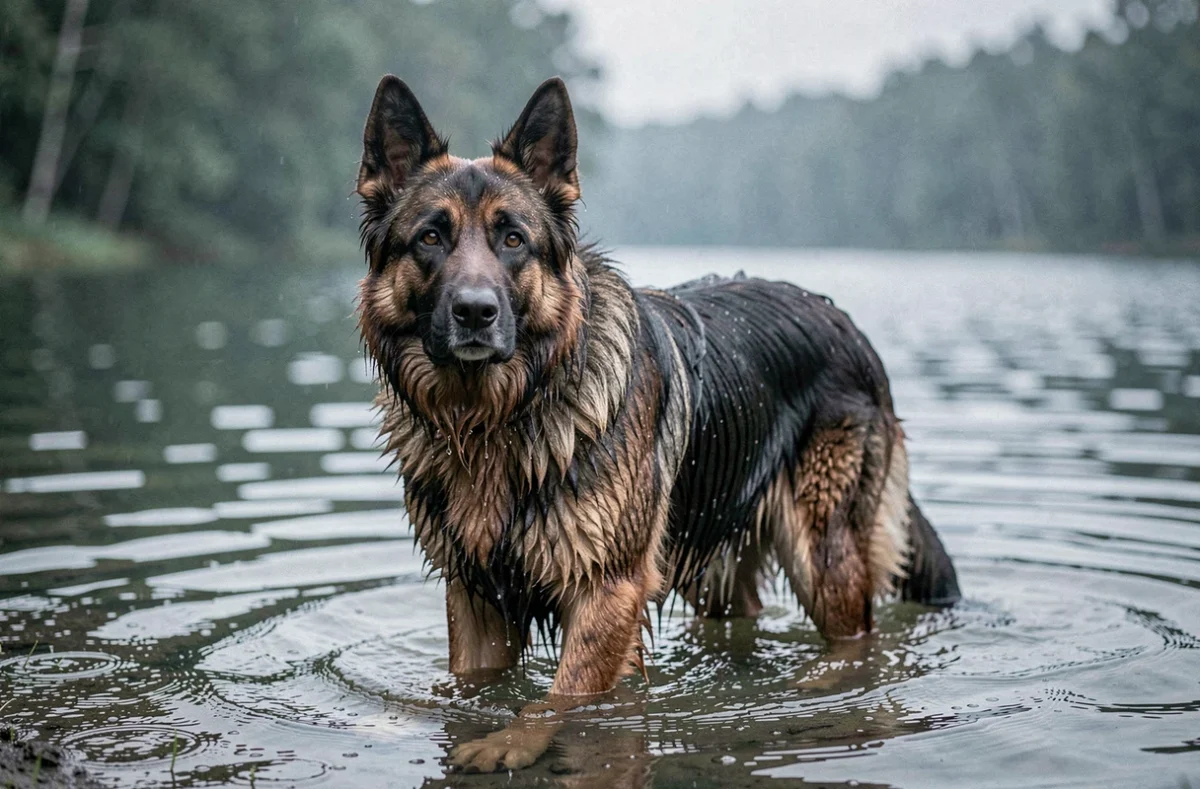
The German Shepherd contributes energy, responsiveness and a need for mental stimulation. The Newfoundland generally passes on a calm temperament, notable patience with children and an affinity for water. The cross often produces a confident, sociable dog, provided the breeding has been carried out responsibly.
Poor breeding practices can lead to aggression or anxiety. This risk is not specific to the cross itself, but rather to the quality of the breeding dogs selected. A puppy from parents with stable temperaments that has been properly socialized has every chance of becoming a reliable family companion.
Exercise needs and training
A dog of this size and intelligence needs plenty of daily exercise. German Shepherds quickly become bored without stimulation, while Newfoundlands enjoy long outings at a more moderate pace. The cross generally falls somewhere between these two profiles.
Training should begin in the first few weeks, especially because the puppy will quickly grow into a large dog that can be difficult to manage if it has not learned the basic rules. Consistency and patience matter more than sheer force with this type of dog.
The German Shepherd–Newfoundland cross is recognized by neither the FCI nor the major purebred dog registries. The Designer Breed Registry and the International Designer Canine Registry list it under the name New Shep, but this recognition remains limited. For owners, this means there is no official physical standard, and variability is an inherent part of life with this dog.