A perceived restorative interior directly affects perceived stress and mood. Research published in the International Journal of Environmental Research and Public Health in 2023 confirms the link between warm materials, natural light, meaningful objects, and a measurable decrease in psychological tension. Starting from this observation changes the way we think about layout: decoration is not an aesthetic exercise, it is a lever for mental health at home.
Color temperature and light spectrum: warmth starts with lighting
The concept of a warm home is primarily based on a technical parameter that most popular articles overlook: the color temperature of light sources. A bulb with a low value on the Kelvin scale produces a spectrum leaning towards amber, perceived as enveloping. Above a certain threshold, the light turns to cold white, useful for a work surface but counterproductive in a living room.
We recommend differentiating lighting circuits by usage area. A living room benefits from combining indirect lighting from wall-mounted fixtures or low-calibrated LED strips with a more intense and adjustable light source for reading or manual work. The classic mistake is to install a single ceiling light that imposes the same ambiance throughout the space.
Resources like madamepervenche.fr allow for exploring decor approaches that integrate this layered lighting logic, combining fixtures, textiles, and wall colors into a coherent whole.
Another overlooked point: natural light passes through glazing differently depending on its orientation. A north-facing facade receives diffuse and cold light all day. Compensating with unlined linen curtains rather than synthetic sheers preserves the light flow while warming the perceived hue thanks to the natural fiber.

Creative corner integrated into the living room: going beyond just a desk
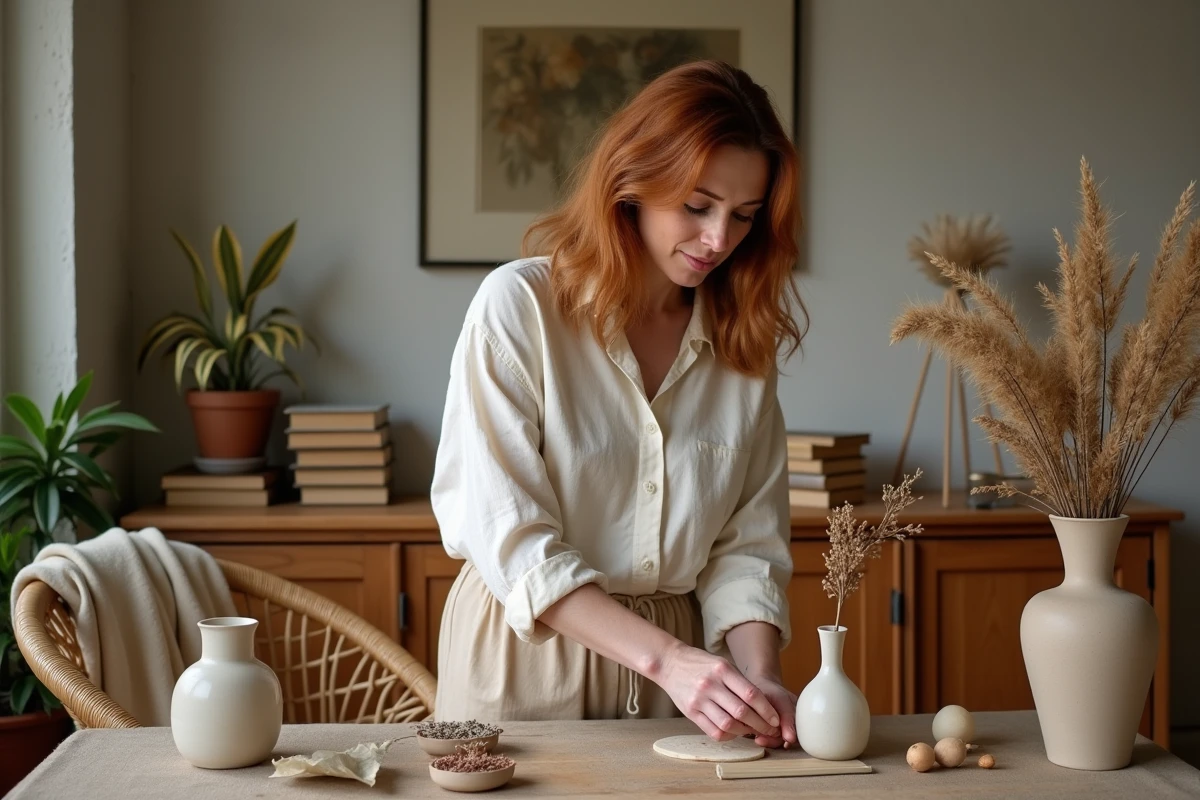
The Global Home Improvement Survey 2024 by Houzz reports a significant increase in renovation projects aimed at creating a hobby or creative workshop corner in living spaces, particularly among 25-44 year-olds who work remotely. This movement goes beyond an ergonomic desk: it is about integrating a dedicated space for a manual or artistic practice directly into the living room or a guest bedroom.
Specifically, a functional creative corner relies on three elements:
- A fixed or foldable work surface, positioned near a source of natural light, with adjustable task lighting for evening sessions
- A closed vertical storage (shallow cabinet, shelf with baskets) that allows for hiding ongoing materials without having to tidy up after each session
- A seating option suitable for the chosen working posture, a high stool for drawing or a low chair for sewing, distinct from the sofa
The creative corner must remain accessible at all times to be used. A workshop that needs to be set up and taken down each time ends up in a closet. Proximity to the main living area encourages spontaneous practice, a quarter-hour of sketching between tasks rather than a planned session that never happens.
Materials and textures: balancing visual effect and real thermal comfort
Decor guides list “warm” materials without distinguishing between two different functions. Solid wood, cork, and wool affect both visual perception and the thermal inertia of the room. A solid oak floor stores and releases ambient heat, whereas a laminate floor mimics the appearance without offering the same tactile comfort.
This distinction has gained importance with recent energy constraints. When the thermostat drops by one or two degrees to manage the bill, the feeling of warmth depends more on the surfaces in contact with the body: flooring, seating textiles, bedding.
Prioritize contact surfaces
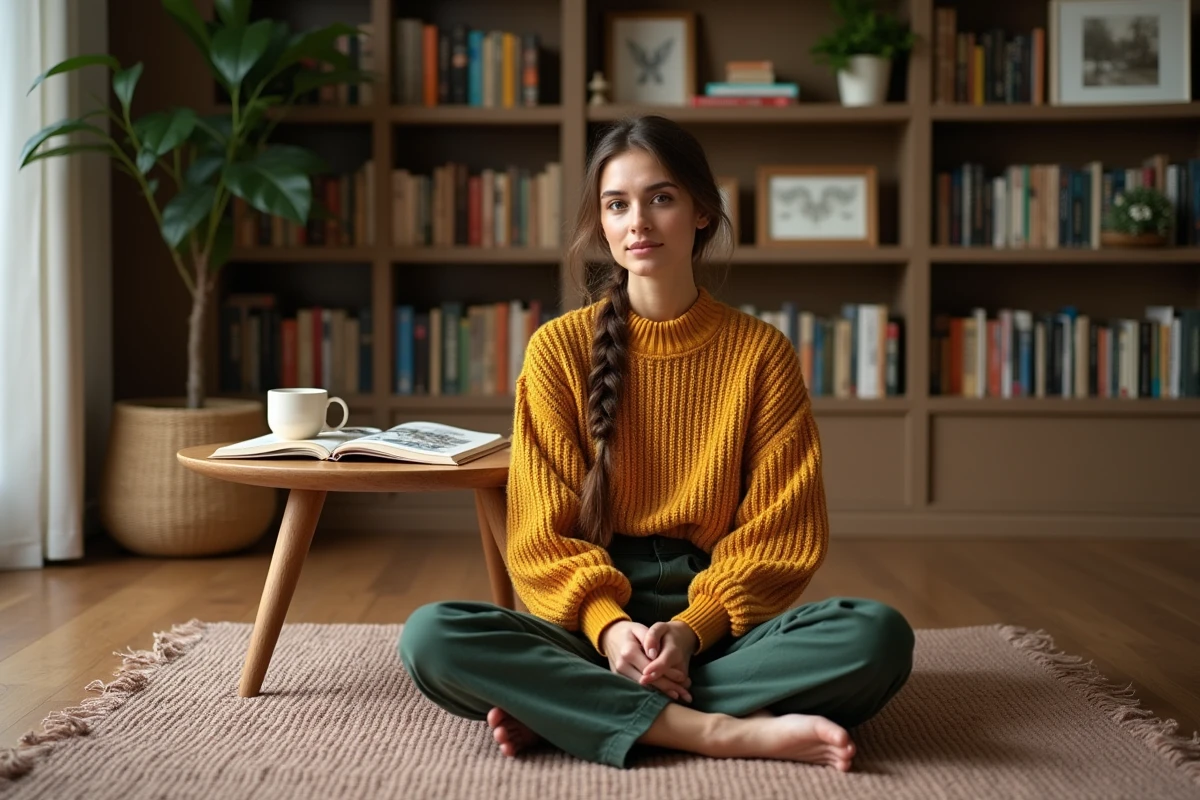
A thick wool rug placed under the coffee table and in front of the sofa alters the thermal perception of a room more than a decorative throw folded over the armrest. Similarly, cushions filled with natural fibers (kapok, wool, down) retain body heat better than their polyester counterparts.
For furniture, raw or oiled wood remains the best compromise between warm aesthetics and durability. Lacquered or melamine finishes create a cold visual effect and reflect light harshly. A piece of reclaimed raw pine furniture, simply sanded and protected with hard oil, adds more character than a new piece made of particle board.
Meaningful objects and domestic memory: what makes an interior unique
Research on restorative environments identifies objects with personal value as a distinct factor of material comfort. A vase brought back from a trip, a series of frames containing carefully chosen photo prints, a piece of inherited and restored furniture: these elements anchor the inhabitant in their own narrative.
We observe that the trend towards radical minimalism has sometimes led to stripped-down but impersonal interiors. The warmth of a home is not decreed by an accumulation of throws and candles. It arises from the coexistence of functional pieces and objects that carry a story.
Rotation and staging
An underutilized trick is to practice seasonal rotation of decorative objects. Storing certain pieces for a few months and then bringing them back out refreshes the look and avoids fatigue without additional purchases. A shelf with five well-spaced objects creates a stronger effect than a surface cluttered with twenty knick-knacks.
The choice of wall colors comes into play here as a backdrop. Muted shades (terracotta, sage green, warm off-white) highlight the objects without competing visually. A well-chosen wall color structures the room as much as a piece of furniture.
The warm and creative home is not a catalog to be reproduced. It is a system where lighting, materials, creative space, and personal objects work together. Every technical choice, from the Kelvin temperature of a bulb to the filling of a cushion, contributes to the final result as much as the choice of a wall color.