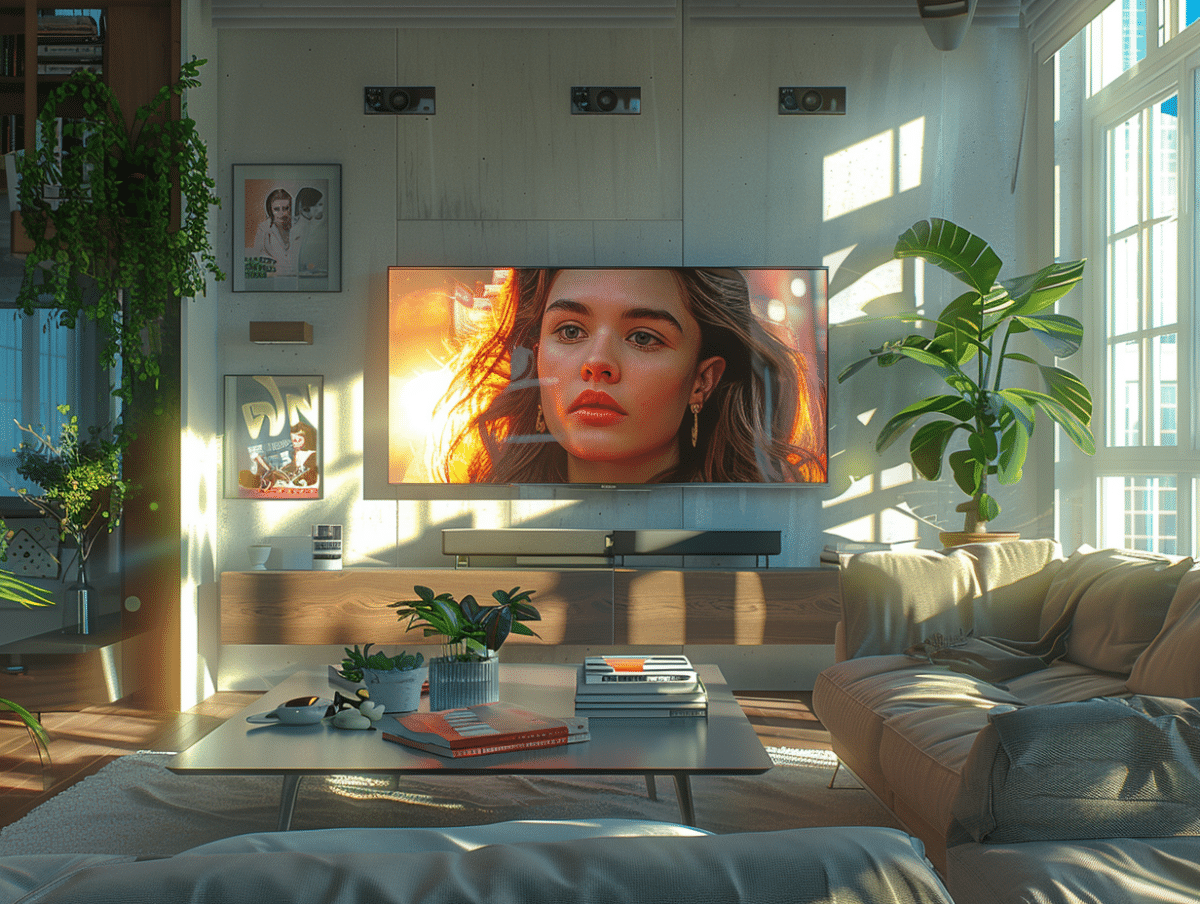
The sudden appearance of a celebrity in a television series often creates a media shock and a thrill among viewers. These cameos, ranging from brief appearances to more substantial roles, serve both as promotional leverage and tribute, injecting a dose of exuberance into the storytelling. Examining these ephemeral interventions reveals a clever interplay between the fame of the guests and the fictional universe of the series. The motivations behind these casting choices, as well as their impact on the audience and the dynamics of the series, deserve special attention to understand these unexpected encounters between the small screen and the stars of Hollywood.
Notable Celebrity Cameos in Television Series
The audiovisual landscape is full of examples where big-screen personalities lend a hand to the small screen. Franck Dubosc in ‘Highlander’ bewildered his audience by stepping away from his usual humor for an incursion into a medieval-fantasy universe. This striking contrast between the comedian and his role offered viewers a new facet of his talent.
In another vein, humor was the vehicle for Dwayne Johnson‘s participation in ‘Hannah Montana’, revealing a little-known self-deprecating side of the star. It is this ability to self-parody that enriched the episode with a touch of freshness. Similarly, ‘New Girl’ benefited from the aura of Prince, while ‘Only Murders in the Building’ drew on Sting’s presence to anchor its narrative in a palpable reality.
Indispensable to this phenomenon, the element of surprise plays a fundamental role. When Hilary Swank appears in ‘The Office’, she breaks the fourth wall, leading the viewer into a metatextual reflection on celebrity and authenticity. This type of appearance, where worlds overlap, tends to captivate and generate media buzz.
The stakes are not only narrative but also promotional. Nabilla in ‘Orange is The New Black’ or Ricky Martin in ‘Glee’ illustrate how these cameos can broaden the audience by appealing to diverse fan communities. These one-day guests bring with them a part of their own legend, helping to shape the very identity of the series that hosts them.
The Impact of Star Appearances on Series Perception
The integration of famous personalities into the backdrop of our favorite series is not limited to ephemeral entertainment. The impact of these interventions is multifaceted, shaping the very perception of the series. When Franck Dubosc slips into the world of ‘Highlander’, he does not just surprise: he expands the expected range of the series, inviting viewers to reconsider their preconceptions about the fantasy genre.
Similarly, Dwayne Johnson’s appearance in ‘Hannah Montana’ not only brought a humorous dimension but also served as a lever to broaden the audience of the series, attracting fans of the actor to this program originally aimed at a young audience. This attraction effect is also evident with Nabilla in ‘Orange is The New Black’, whose popularity among a connected youth likely enhanced interest in the series.
The event that is Prince’s presence in ‘New Girl’ or Sting’s in ‘Only Murders in the Building’ goes beyond the simple pleasure of recognition. These cameos confer a special aura to the work, a sense of exception that reflects on the perception of its quality. The authenticity that Sting brings to his own role enhances immersion and legitimizes the narrative.
The participation of figures such as Michelle Obama in ‘iCarly’ or Paris Hilton in ‘Veronica Mars’ cannot be reduced to a publicity stunt. Indeed, these appearances help shape an image of prestige and glamour associated with these series. Matthew McConaughey’s presence in ‘True Detective’, for its part, contributed to establishing the credibility and perceived quality of the series, as evidenced by critical attention and awards received. Celebrity cameos are part of a complex mechanism that, beyond anecdote, durably influences the reputation and success of television productions.